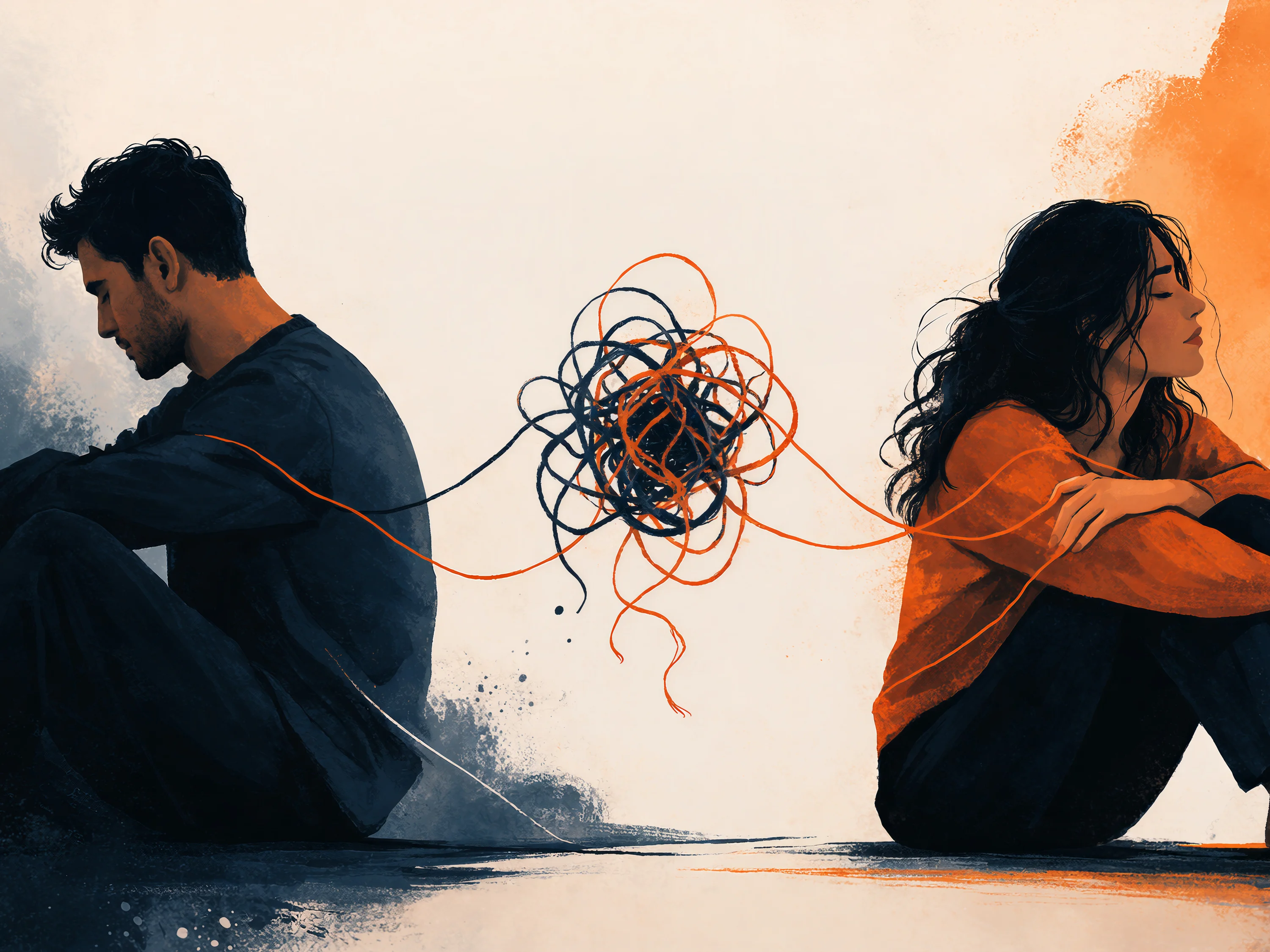
If you have ever found yourself thinking, “Why do I keep going back when I know this relationship isn’t healthy?” you are not alone. Many people experience something called trauma bonding, a pattern where emotional attachment forms through cycles of closeness and distress. It can make leaving a relationship feel much harder than it looks from the outside.
What is Trauma Bonding?
Trauma bonding happens when a relationship mixes closeness with fear, conflict, or emotional pain.
These relationships rarely start out that way, but over time, an unhealth pattern emerges. Moments of hurt, tension, or unpredictability start getting followed by moments of kindness or affection. Those ups and downs can create a powerful pull.
After a painful moment, even a small moment of calm can feel incredibly comforting. Over time, the mind and body begin linking those feelings together. The same person who causes distress also becomes the person who brings relief.
That cycle can make it difficult to step away, even when part of you knows something is not right. For many people, these patterns are not new. If relationships earlier in life felt inconsistent, distant, or tied to conflict, those experiences can shape what feels familiar in adulthood.
Why Trauma Bonding Feels So Strong
Trauma bonds are powerful because they connect to basic human needs. People want connection. People want to feel seen and valued.
Several things tend to keep these bonds in place:
- Unpredictability strengthens attachment because the nervous system stays on alert, making intensity feel like connection.
- Relief begins to feel like safety when calm follows conflict, making the relationship feel more meaningful than it is.
- Familiar patterns pull people back when dynamics resemble earlier experiences of inconsistent or conditional care.
- Shame keeps people silent, making it harder to talk about what is happening or ask for support.
None of this means someone lacks strength. It means the mind learned how to survive a confusing kind of connection.
Signs You May Be Experiencing Trauma Bonding
Trauma bonding can happen in romantic relationships, family dynamics, friendships, and even work environments.
Some common signs include:
- Feeling pulled back in after deciding to step away
- Making excuses for harmful behavior because of brief moments of kindness
- Mistaking emotional intensity for real closeness
- Feeling uneasy when things are calm or stable
- Questioning your own judgment or instincts
These experiences can leave people feeling worn down and unsure of themselves. They may sense something is wrong, but leaving or creating distance feels overwhelming.
What Helps Break the Pattern
Breaking a trauma bond usually takes more than simply realizing what is happening. Real change comes through practice, support, and time.
People often need space where they can slow down, speak honestly, and begin trying new ways of responding in relationships.
Structured therapeutic environments make that possible. Programs like Sanare’s Intensive Outpatient Program (IOP) create space for people to practice new skills, receive steady support, and experience healthier forms of connection.
In these settings, people can:
- Practice new responses in real moments instead of only talking about them
- Learn skills that help steady emotions during stressful situations
- Build trust in their own judgment again
- Experience connection that feels consistent and respectful
When people have the chance to practice these skills with steady support, different patterns begin to form. Over time, relationships can start to feel calmer, clearer, and more stable.
Finding The Right Support for Trauma Bonding
If you are searching for trauma therapy or therapy near you, the first step does not have to feel overwhelming.
Patterns like trauma bonding are learned through experience, and with the right support and practice, they can change. Our therapists build environments grounded in authenticity, creativity, and connection so people can learn and practice new skills in ways that make them easier to access when it matters. We offer outpatient therapy and structured therapeutic programs across Delaware, North Carolina, and Pennsylvania.
More Insights

IOP in Wilmington, NC: When the Right Level of Care Is Hard to Find
April 6, 2026

IOP in Bucks County, PA: Trauma & DBT Programs in Doylestown and Yardley
March 18, 2026
What Is Trauma Bonding? Signs, Causes, and How to Break the Pattern
March 3, 2026
Finding “Therapy Near Me”: A Practical Guide to Mental Health Support
February 13, 2026

Ways to Spend the Holidays Alone in PA, DE, & NC

Spending The Holidays Alone vs. With Family
December 23, 2025
.jpg)
The Holiday Survival Guide: Therapist Tips for When Family Gets Stressful - Pennsylvania, Delaware, & North Carolina Edition
December 11, 2025

How to Deal with Anxiety at Work | Sanare - Your Pennsylvania, Delaware & North Carolina Therapist
November 5, 2025
Why Do I Get So Angry Over Little Things?
August 18, 2025

10 Celebrities Who Make Mental Health Conversations Feel Normal (Because They Are)
July 30, 2025

“Who let me be an adult?” Overcoming Imposter Syndrome
July 1, 2025

Overstimulation 101: Why everything feels too loud (and what to do about it)
May 29, 2025

Worried you’re a bad parent if your teens struggling with their mental health? This will free you from that guilt
March 17, 2025

The parent's guide to finding a therapist who actually gets your teen
March 31, 2025

Podcast episode: What your teen's NOT saying (but desperately needs you to hear)
February 20, 2025

Why your teen's always stressed,—and what you can do about it
February 6, 2025

Teen mental health help: what to do when your kid's not okay (and won't say it out loud)
January 21, 2025

Which type of therapy do you actually need? (A no-BS guide)
January 14, 2025

Holiday depression: when "merry & bright" feels like a lie
December 11, 2024

What’s the best therapy for depression? Here's what'll move the needle
November 1, 2024

How often should you go to therapy? (Spoiler: it's not just once a week)
September 27, 2024

What’s the best kind of therapy for childhood trauma?
September 11, 2024

7 subtle signs your teen's not okay (that are easy to miss)
February 4, 2025